


Google Play Games
Google LLC
I came to Google Play Games expecting a simple place to open games, but its real value is easier to understand as part of a complete gaming routine. I start with a game installed on an Android phone, want to continue where I left off, and then look for some proof that my progress mattered. Google LLC’s entertainment app connects those steps through game access, saved progress, and achievements rather than trying to replace every game with one universal interface.
That makes it useful in a very particular way. It is not a game in itself, and it is not a full social network for every gaming platform. I see it more as a layer around compatible games: a place to discover or launch supported titles, keep an eye on accomplishments, and make changing devices less stressful. The experience is free, carries a Teen content rating, and has become familiar to a huge Android audience, with over five billion installs and an average rating of four out of five.
My overall impression is positive when I treat it as a practical gaming hub instead of expecting a complete library, a cloud-gaming service, or a replacement for each developer’s own account system. The difference matters. If your main concern is remembering which games you play and what you have achieved, it can be convenient. If you want deep community tools, detailed game management, or one guaranteed save system for every title, the usual alternatives may still be stronger.
Related News

Why Google Play Store Keeps Pulling Android Users Back

Why Yandex Go: Taxi Food Delivery Becomes an Everyday Habit
From an installed game to a completed session
The starting point: what problem it actually solves
The most realistic starting condition is familiar: I have several games on my phone, I do not want to search through every app icon, and I would rather not lose a campaign or achievement when I move to another device. Google Play Games gives that situation a central point. Its store short description is simply Google Play, but the app’s practical role is more specific: it organizes the gaming side of Google’s mobile ecosystem.
The first useful distinction is between the app and the games themselves. Opening this app does not turn every installed title into a managed game with identical controls or identical save behavior. Each game remains responsible for much of its own experience. The hub can help surface supported games and connect progress-related features, but the handoff into a particular title still determines what happens next.
Related News

Why WhatsApp Messenger Still Makes Everyday Communication Feel Easy

Jurassic World: The Game Is the Better Dino Tycoon for Strategic Players

Threads in Real Life: Who Should Join, Lurk, or Leave

How SHEIN Turned Shopping Into an Endless Content Feed

How to Make Fortnite Feel Smarter on Mobile

Should You Switch to Microsoft Outlook on Mobile?
I find that separation helpful because it prevents unrealistic expectations. A player who mainly uses one game may not need a separate hub at all; the game’s own icon and account tools may be enough. The app becomes more worthwhile when I rotate between several games, care about achievements, or regularly change phones and want a more organized starting point.
There is also a useful psychological benefit. A long list of installed games can feel like clutter, while a dedicated gaming space makes it easier to choose intentionally. That sounds minor, but it changes the everyday workflow: I open one place, decide what I want to play, and then hand control to the selected game instead of browsing aimlessly through the phone.
Step one: finding the right game before playing
My first step is to open the hub and identify the game I want. That may mean choosing something I already know or looking through the available gaming selection. The important point is that the app works as a front door rather than as the room where the entire session takes place.
Gallery
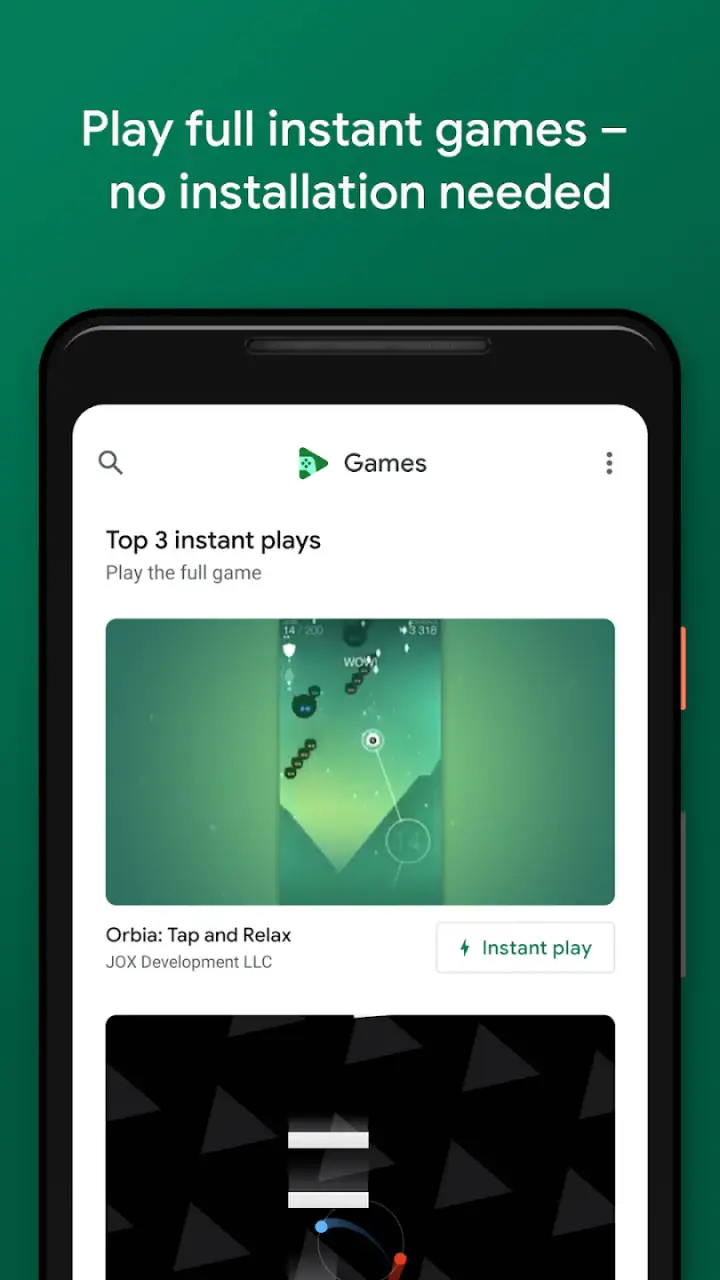
For a casual player, this can reduce friction after a busy day. Imagine finishing work, having fifteen minutes before dinner, and wanting a familiar puzzle or arcade session. Instead of remembering where the icon is or scrolling through unrelated apps, I use the gaming hub as my starting point. The outcome is not a dramatic new feature; it is a quicker path from intention to play.
For families, the Teen rating is worth keeping in mind. It does not mean every game presented through the service is suitable for every child. The rating should prompt parents to look at the individual games and the way a particular child uses the phone. The hub is a convenient doorway, but it does not remove the need for judgment about the content behind that doorway.
One small habit improves the experience: I keep the hub for discovery and organization, but I do not force myself to launch every game through it. If I am repeatedly playing one favorite title, its direct shortcut may be faster. The app earns its place when I need the broader view, not when it adds an extra tap to a routine I already know.
Step two: launching a session and handing control over
After choosing a game, the workflow hands off to the game itself. This is the central transition to understand. The hub can begin the journey, but the selected title controls its menus, loading behavior, controls, and actual gameplay. That means the quality of the session depends on both layers.
I like this arrangement because I can use the hub as a neutral starting point while keeping the game’s own identity intact. A racing game can remain focused on racing, and a role-playing game can keep its own progression screens. I do not have to learn one universal interface for every genre. The drawback is that the handoff can feel less seamless than a single all-in-one platform, especially when a game asks me to complete its own sign-in or setup steps.
This is where many users will wonder whether saved progress is automatic. My practical answer is to check the game’s behavior rather than assume that the hub alone guarantees everything. Google Play Games is designed around saving progress and achievements, but individual game compatibility and account handling still matter. Before deleting a game or resetting a phone, I would open the title, verify that its progress is connected as expected, and avoid treating the hub as a substitute for every in-game backup option.
That precaution is not a criticism of the concept; it is a sensible boundary. Mobile games do not all use progression in the same way. Some rely heavily on their own accounts or servers, while others make the platform connection more visible. The best workflow is therefore: launch through the hub when useful, inspect the game’s own account screen when progress matters, and only then assume that a future handoff will be painless.
Step three: playing with progress in mind
Once I am inside a supported game, the app largely moves into the background. This is a strength because it does not constantly interrupt the session. I can focus on the title itself and let the gaming layer become relevant again when I finish a milestone or leave the game.
Achievements are especially useful for players who need a reason to return to games they might otherwise abandon. They give a session a second outcome beyond winning the current match or completing the current level. I might finish a challenge, notice that it contributes to a longer list of accomplishments, and decide to continue later. That extra structure is modest, but it can make a large collection of short games feel more coherent.
There is a trade-off, though. Achievements are meaningful only when I care about them. For a player who wants a completely quiet, private session, achievement prompts and progress tracking may feel like unnecessary decoration. I would not recommend building a gaming routine around them if you prefer to play without goals, records, or platform-level recognition.
A useful advanced habit is to separate “progress I need to preserve” from “progress I want to display.” A campaign save is practical; an achievement is motivational. Keeping those purposes distinct helps me decide whether a game’s own account system deserves attention, whether I should finish a session before switching devices, and whether the hub is adding value or merely showing information I do not use.
The handoff back: seeing what the session produced
When I leave a game, the result becomes visible through the broader gaming profile and achievement history, where supported. This return handoff is the part that makes the app feel more than a launcher. The session has an aftereffect: I can recognize what I completed and use that information to choose my next game.
For someone who plays several titles, this overview can be more useful than relying on memory. It helps answer practical questions such as which game I have neglected, which title I have made meaningful progress in, and whether a new session is likely to continue an existing goal. It also gives a sense of continuity when the games themselves have very different menus and styles.
However, I would not confuse this overview with a detailed personal gaming journal. The app is strongest at broad platform-level organization. If I want extensive notes, build planning, competitive analysis, or a complete record of every in-game decision, a dedicated community, spreadsheet, or game-specific tool may be better. Google Play Games keeps the workflow light; it does not aim to become a specialist database.
Changing devices: the moment the service matters most
The clearest use case arrives when I move from one Android device to another. Without a central gaming layer, I might reinstall titles one by one, remember which games mattered, and hope each save follows me. With Google Play Games involved, the intention is more orderly: reconnect to the gaming environment, find the relevant titles, and continue where supported.
I still recommend treating a device change as a checklist rather than a single-button promise. Before switching, I would note the games I care about, open each important title, and confirm that the progress is associated with the expected account. After the move, I would launch the most valuable game first and verify the result before removing the old device’s data. This workflow is more cautious than simply trusting a badge or profile, but it protects against the most frustrating outcome: discovering a missing save after the old phone is gone.
This is one of the app’s strongest practical advantages over a plain folder of game icons. A folder can organize access, but it cannot provide the same platform-level sense of continuity. On the other hand, a game developer’s own account system may still be more authoritative for that specific title. If a game offers a clearly documented internal account or backup method, I would use it alongside the platform connection rather than choosing one blindly.
How it compares with the usual alternatives
The simplest alternative is doing nothing beyond using the phone’s home screen. That is perfectly adequate for someone with one or two games and no interest in achievements. It is faster for direct launching and avoids another layer, but it offers little help with discovery, gaming history, or a device transition.
Another alternative is relying entirely on each game’s own login. This can be better when I spend most of my time in one major title, because the developer’s account may expose more detailed progress, purchases, settings, and recovery options. The weakness is fragmentation: every game can use a different sign-in process, and there is no single place to understand the collection.
Dedicated gaming communities are stronger when conversation, guides, clips, rankings, and player identity are the priority. Google Play Games feels quieter and more functional by comparison. I would choose the community platform for discussion and the Google hub for a straightforward launch-and-progress routine.
On iOS, Apple’s gaming layer can be the more natural choice for someone fully invested in that ecosystem. Google Play Games makes the most sense for Android users who want Google’s gaming services around their installed titles. In other words, the best option is often determined less by abstract feature comparisons and more by where the games and devices already live.
Where the flow breaks down
The first point of friction is compatibility. The hub cannot make every game behave identically, and the value of saved progress or achievements depends on how a title connects to the service. If my favorite game does not meaningfully use those functions, the app may feel like an unnecessary middle step.
The second issue is duplicated identity. A game may have its own account, while the platform has a separate gaming profile. That can be manageable, but it creates opportunities for confusion when I switch accounts, reinstall a title, or use more than one device. My advice is to record which account is attached to important games before making a major change. A few minutes of checking is preferable to guessing later.
The third limitation is scope. This is not the best choice for someone seeking a universal cross-platform library, advanced social tools, or a replacement for a desktop game launcher. Its strength is convenience within Google’s mobile environment. Outside that setting, the benefits naturally become less compelling.
I also notice a tension between discovery and distraction. A central catalog can help me find something to play, but it can also encourage browsing when I intended to take a short break. If I am trying to keep screen time controlled, I use the hub to select one game before opening it, rather than wandering through recommendations and turning a fifteen-minute plan into a much longer session.
Who should install it, and who can skip it
I would recommend it to Android players who keep several games installed, enjoy collecting achievements, or expect to replace devices from time to time. It is also a sensible choice for people who want one recognizable gaming entry point instead of hunting through a crowded home screen.
I would be more cautious about recommending it to someone who plays only one title and already uses that game’s account system confidently. In that case, the direct game shortcut may be simpler. I would also suggest skipping it if you want a deep social network, extensive game statistics, or a single service that guarantees identical behavior across every platform and every title.
Its free price removes the biggest barrier to trying it, and the large installed base suggests that it is a familiar part of Android gaming. The average rating of four out of five reflects a generally solid but not universally perfect experience, which matches my view: the app is useful when its central workflow fits you, but it is not a must-have layer for every player.
My final workflow and recommendation
My preferred routine is simple. I open the hub when I want to choose among several games, launch the selected title, check its own account connection if the save is important, play without expecting the hub to control the session, and return afterward to see whether the achievement or progress record reflects what I completed. Before changing phones, I repeat the verification step for the games I care about most.
That routine shows where Google Play Games succeeds. It takes a scattered mobile habit and gives it a beginning, a handoff, and a recognizable result. It does not eliminate every account or backup concern, and it cannot compensate for a game that barely uses platform features. Still, for an Android player who wants a free, low-effort gaming organizer with saved-progress and achievement support, I think it is worth keeping installed.
My recommendation is practical rather than universal: try it if your games are numerous, your device changes are occasional but important, or achievements make play more satisfying. If your needs are centered on one game’s advanced tools or on a busy gaming community, use that game’s own services or a specialist alternative instead. Google Play Games is at its best as the quiet connection between choosing a game, playing it, and carrying the result forward.
FAQs for Google Play Games
What is Google Play Games, and how does it enhance my gaming experience?
Google Play Games is a comprehensive gaming service available on Android devices that enhances your gaming experience by offering features like achievements, leaderboards, and cloud saves. It allows you to track your progress, compete with friends, and play across devices without losing your game data, making it a must-have for avid gamers.
Does Google Play Games require an internet connection to function?
While you can play many games offline, Google Play Games requires an internet connection for certain features like syncing achievements, accessing leaderboards, and saving progress to the cloud. To fully utilize all functionalities, including multiplayer options, a stable internet connection is recommended.
Is it possible to use Google Play Games on multiple devices?
Yes, Google Play Games supports multi-device functionality. By signing into your Google account, you can seamlessly switch between devices. Your progress, achievements, and game data are synced across all your devices, ensuring a smooth and consistent gaming experience wherever you play.
How do I manage or uninstall games through Google Play Games?
Managing games is simple with Google Play Games. You can view and organize your library from within the app. To uninstall a game, locate it in your library, tap on it, and select 'Uninstall'. This will remove the game from your device while maintaining your saved data if synced to the cloud.
What privacy settings are available in Google Play Games?
Google Play Games offers various privacy settings to protect your information. You can control who sees your activity, manage account visibility, and customize what data is shared. Access these settings through the app’s menu under 'Settings', ensuring your gaming habits remain private and secure.
Pros
- Seamless cloud save feature.
- Wide variety of games available.
- Easy integration with Google account.
- Achievements tracking enhances gameplay.
- Family sharing options available.
Cons
- Limited offline gameplay options.
- Some games require in-app purchases.
- Occasional sync issues with progress.
- High battery consumption on older devices.
- Advertisements in free games can be intrusive.


